
Mapping infrastructure. Managing risk. Planning for the future.
Infrastructure is often out of sight and out of mind until something goes wrong. For residential communities, municipalities, and private infrastructure owners, understanding the condition of existing infrastructure is essential. It helps them manage risk, maintain service levels, and plan future expenditures.
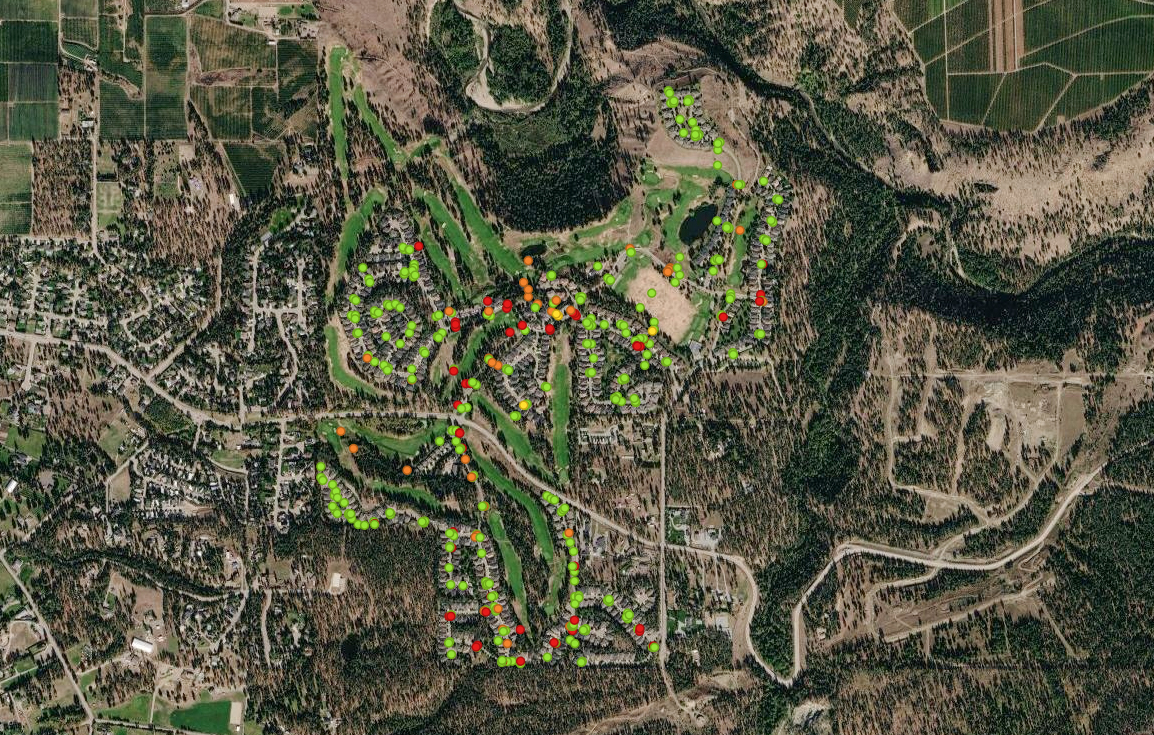
CTQ Consultants have been working with the Gallagher’s Canyon community in Kelowna, BC, to develop a comprehensive stormwater infrastructure assessment and preventative maintenance program.
The project encompasses 390 stormwater structures across 16 strata and common areas, including catch basins, manholes and drywells.
Understanding Existing Infrastructure
Effective asset management begins with understanding what infrastructure exists, its location and its current condition. Through field inspections, our civil engineering team collected detailed information on individual stormwater structures. We documented their visible condition, accessibility, maintenance requirements and potential deficiencies.
This information helps us identify which structures need immediate attention, and which require further investigation. It also highlights assets that can be managed through routine preventative maintenance.
Turning Field Data into Actionable Maintenance Plans
Collecting infrastructure data is only one part of the process. The real value comes from translating that information into practical recommendations that property owners and managers can implement.
For Gallagher’s Canyon, CTQ developed a framework to support:
- Infrastructure condition assessments and risk prioritization.
- Identification of repair and replacement requirements.
- Preventative maintenance and inspection schedules.
- Strata-specific maintenance plans.
- Short- and long-term infrastructure budgeting.
- Digital asset management and ongoing maintenance tracking.
By separating corrective work from recurring maintenance requirements, we help individual strata better understand their infrastructure responsibilities and plan future budgets.
Leveraging Digital Technology
We use our digital asset management platform to geographically map individual stormwater structures. It brings together inspection findings, photographs, and engineering recommendations within a centralized, interactive system.
This approach allows infrastructure information to be organized geographically and accessed at an individual asset level.
Rather than relying solely on static engineering reports, the digital platform provides a foundation for an evolving infrastructure register. This can support future inspections, maintenance activities, repairs and asset history.
As infrastructure conditions change and work is completed, the system has the potential to provide an increasingly valuable record of asset performance over time.
Moving from Reactive to Proactive Maintenance
A structured preventative maintenance program can help infrastructure owners reduce the risk of unexpected failures, extend asset service life, and make more informed financial decisions.
Communities can take a more proactive approach to infrastructure management by understanding which assets require attention, when maintenance should occur and what financial resources may be required.
While this project focuses on stormwater infrastructure, the same principles can be applied to a wide range of civil infrastructure assets. These include water distribution systems, sanitary sewer networks, roads and other community infrastructure.
Engineering Beyond Design
At CTQ Consultants, our role extends beyond the design and construction of infrastructure. We also help communities understand, manage, maintain, and protect their existing assets throughout their lifecycle.
By combining civil engineering expertise, field investigations, digital technology, and practical maintenance planning, we aim to provide our clients with the information and tools they need to make informed decisions today while preparing for the future.
Whether supporting a residential strata, municipality or private infrastructure owner, our approach is focused on delivering practical, sustainable, and long-term infrastructure solutions.
Engineering for today. Planning for tomorrow.